Home Mirrors: Transform Your Space with Reflection
Discover how to choose and style mirrors that transform your home. From organic shapes to antiqued finishes, learn mirror placement, sizing, and DIY tricks.

Mirrors are one of the few items whose presence is justified in literally any room of your home. Like plants, mirrors have this magical ability to belong anywhere while actually earning their keep. They're not just decorative—they're working overtime to reflect light, create the illusion of space, and add architectural interest to blank walls. A well-placed mirror can transform a cramped, dark room into something that feels twice its actual size.
Let's talk about choosing, placing, and styling mirrors so your home feels bigger, brighter, and infinitely more sophisticated.
How Can Mirrors Improve Natural Light in a Room?
This is where mirrors prove they're not just vanity accessories—they're legitimate design tools.
The Science of Reflection
Mirrors reflect light. Obvious, right? But the strategic placement makes all the difference. A mirror hung opposite or adjacent to a window captures natural light and bounces it throughout the room, essentially creating multiple light sources from a single window.
The golden rule: Ideally, mirrors should be hung in front of a window to create the illusion of multiple sources of natural light. This doubles the perceived brightness without adding a single extra lamp.
Think of it like this: your window is a spotlight, and your mirror is the reflector panel photographers use. Position it correctly, and suddenly your dim room feels sun-drenched.
Where Light Magic Happens
Best rooms for light-reflecting mirrors:
- Living rooms with limited windows: A large mirror opposite your main window transforms the space and give the illusion of another source of light
- Hallways: Often windowless and cave-like, mirrors bring borrowed light from adjacent rooms
- Small bedrooms: Reflect morning light to wake up in brightness rather than gloom
- Dining rooms: Evening ambient light reflected creates intimate, flattering illumination
What Are the Trending Mirror Shapes for 2026?
Mirror shapes have personality, and 2026 is all about moving beyond basic rectangles.
The Shape Revolution
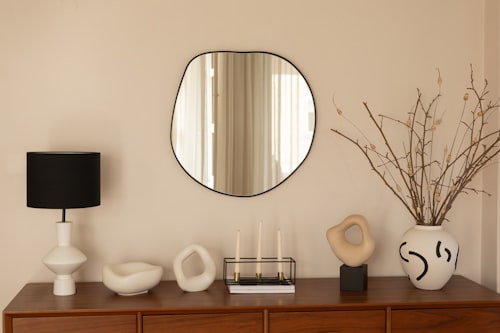
- Organic mirrors are having their moment. These are mirrors with irregular, nature-inspired edges—think kidney bean shapes, amoeba-like curves, abstract blobs that look like they were formed by wind and water rather than straight edges and rulers.
Why organic shapes? They soften angular furniture, add visual interest without pattern, and feel contemporary without being coldly modern.
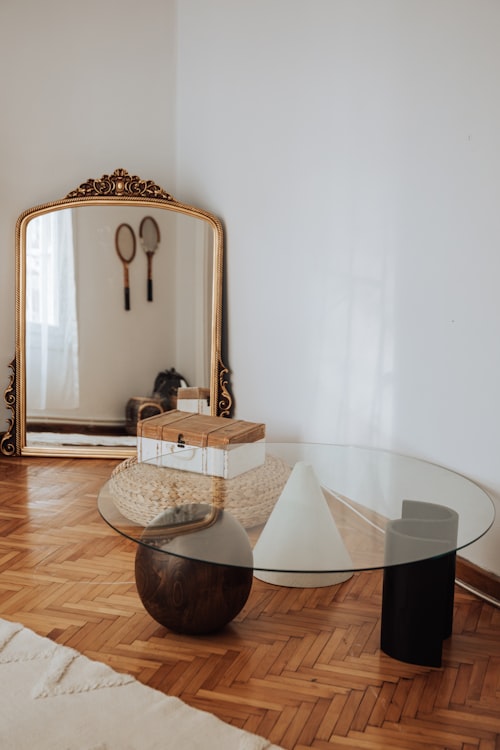
- Arched mirrors are the sophisticated older sibling of organic shapes. That gentle curve at the top instantly elevates a space, adding architectural detail even in the blandest rooms. We particularly love arched mirrors for their originality—they're distinctive without being trendy in a way that'll date quickly.
Shape Breakdown by Style
| Mirror Shape | Best For | Design Style | Room Placement |
|---|---|---|---|
| Arched | Adding architectural interest | Transitional, traditional, modern | Entryways, above dressers, living rooms |
| Organic/Irregular | Softening angular spaces | Contemporary, eclectic, organic modern | Anywhere you want visual softness |
| Round | Creating flow and balance | Scandinavian, minimalist, coastal | Bathrooms, bedrooms, hallways |
| Rectangular | Classic, versatile placement | Any style, traditional default | Full-length in bedrooms, above consoles |
| Oval | Elegant, timeless | Traditional, vintage, feminine | Bedrooms, powder rooms, entryways |
| Square | Modern, structured | Contemporary, minimalist, geometric | Bathrooms, modern living spaces |
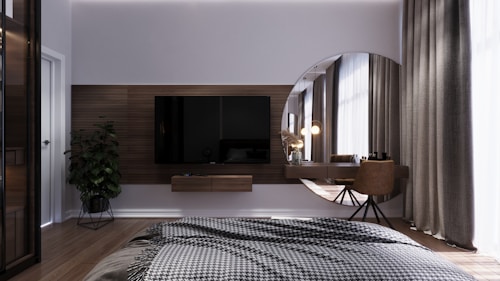
Round mirrors remain popular for their ability to soften hard edges and create visual balance. They work particularly well in rooms dominated by rectangular furniture.
How Do I Choose the Right Mirror Size for My Space?
Size is where people often play it too safe, and that's a mistake. When it comes to mirrors, bigger is almost always better.
The Size Philosophy
If your space allows, prefer oversized and stylish mirrors in the living room and tall mirrors in bedrooms. Large mirrors make bold statements, anchor walls, and maximize light reflection. A tiny mirror on a massive wall looks apologetic and unfinished.
Room-specific Sizing
-
Living rooms: Go big or go home. A mirror should be substantial enough to balance your sofa or be the focal point above a console table. Aim for at least 36-48 inches wide.
-
Bedrooms: Full-length or tall mirrors are ideal. You need to see your entire outfit, and tall mirrors (60+ inches) create the illusion of higher ceilings.
-
Bathrooms: Above a vanity, the mirror should be 4-6 inches narrower than the vanity itself, or go wall-to-wall for modern drama.
-
Entryways: A generous mirror (minimum 30 inches wide) makes small entryways feel spacious and gives you that crucial last-minute appearance check.
-
Hallways: Long, horizontal mirrors widen narrow hallways. Vertical mirrors make low ceilings feel taller.
The Common Mistake
Hanging a 12x18 inch mirror on a 10-foot wall. It looks lost, insignificant, and does nothing for the space. If you can't afford a large mirror, consider grouping multiple smaller mirrors for impact.
What Mirror Styles Work Best with Modern vs Vintage Décor?
Style matters enormously, and the frame (or lack thereof) sets the tone.
For Modern and Contemporary Spaces
- Frameless mirrors: Clean, minimal, let the reflection do the talking
- Thin metal frames: Black, brass, or brushed gold add just enough definition
- Geometric shapes: Hexagons, asymmetric designs, architectural forms
- Oversized statement pieces: Lean-against-the-wall floor mirrors
Modern spaces appreciate simplicity and clean lines. The mirror should enhance rather than compete.
For Traditional and Vintage Spaces
- Baroque mirrors: Ornate, carved frames with elaborate details—incredibly sophisticated when used correctly
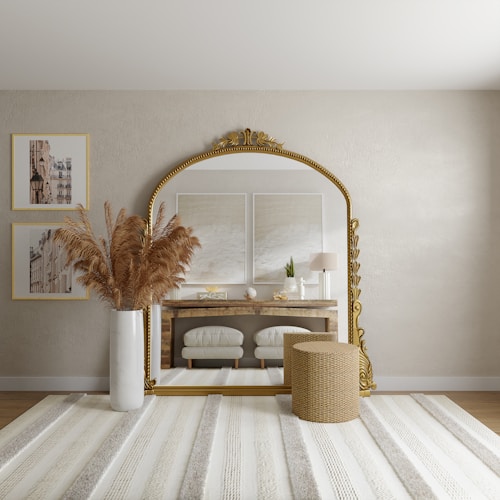
- Antique gold mirrors: Warm metallic frames with patina and character
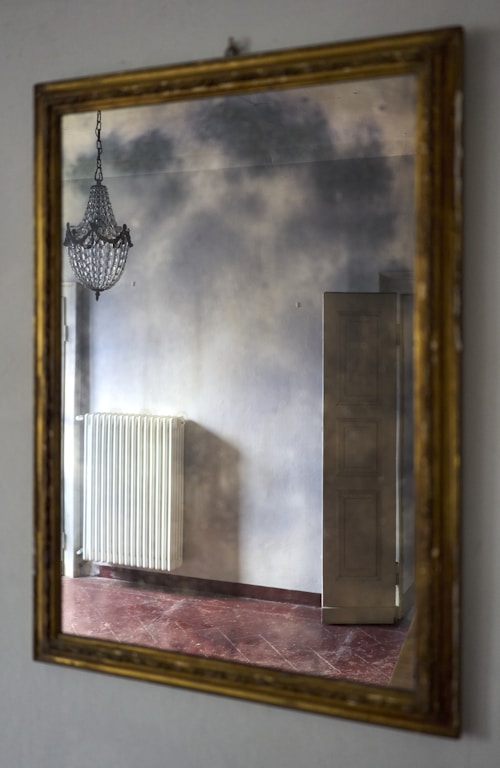
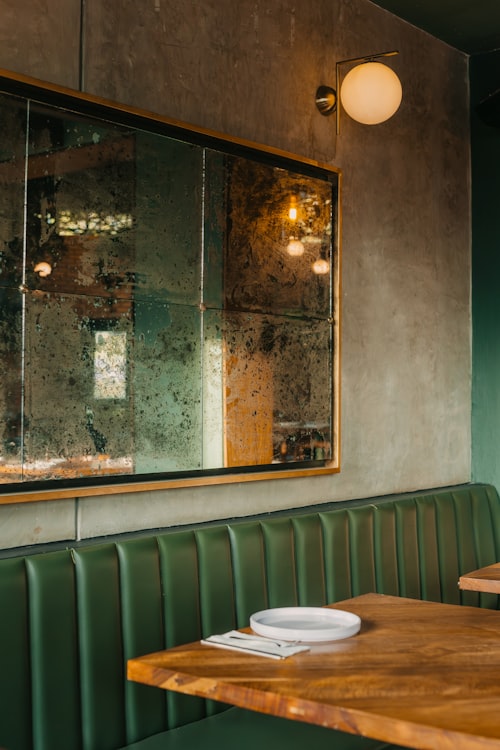
- Antiqued mirrors: Distressed glass with that mottled, aged appearance that adds instant history
The Style Sweet Spot
Baroque mirrors are statement pieces best for traditional or maximalist interiors. Antique and antiqued mirrors are versatile, blending well across many styles. If unsure, choose simple shapes (round, arched, rectangular) and neutral frames (black, natural wood, brass, or frameless) for timeless versatility.
Can Mirrors Be Used as Statement Art Pieces?
Absolutely, mirrors can be sculptural focal points with distinctive shapes and frames.
How to Make Mirrors Work as Art:
- Choose distinctive shapes: Organic, abstract, architectural
- Focus on frame quality: Sculptural, textured materials like rattan or brass
- Go oversized for bold impact
- Group multiple mirrors artistically
- Light them properly with sconces
How Do I Clean and Maintain Decorative Mirrors?
Mirrors show every fingerprint and smudge. Regular cleaning keeps them pristine.
Universal Mirror Cleaning
- Mix equal parts water and white vinegar in spray bottle
- Spray onto microfiber cloth (never directly on mirror)
- Wipe in circular motions
- Buff with dry microfiber cloth for streak-free shine
For stubborn spots:
- Use rubbing alcohol on cotton pad
- Use newspaper for buffing
Avoid:
- Abrasive cleaners
- Excessive moisture on antiqued mirrors
- Ammonia-based cleaners on gilded frames
The Budget-Friendly Approach: Facebook Marketplace Treasures
You can find incredible mirrors on Facebook Marketplace inexpensively. Mirrors are easy to inspect and clean. Look for solid frames and undamaged glass.
Vintage mirrors often have better quality frames than modern mass-produced ones.
DIY: Create Your Own Antiqued Mirror
Antiqued mirrors are gorgeous but expensive. DIY antiquing is achievable with proper safety.
DIY Antiquing Process
- Use a basic mirror and mirror removal solution or muriatic acid
- Carefully remove portions of reflective backing for aged look
- Tutorials available online for step-by-step guidance
Benefits: Cost effective, unique, satisfying.
Final Thoughts: Reflection as Transformation
Mirrors aren't optional—they multiply light, expand space, add interest, and act as art.
Choose oversized mirrors when possible, embrace organic and arched shapes, explore baroque and antiqued styles, and hunt for vintage treasures.
Whether statement pieces or DIY projects, mirrors uniquely transform your space.
This article contains affiliate links, meaning I may earn a commission if you click through and make a purchase, at no extra cost to you.